Support Chat
Our team designed an innovative chatbot experience that increased lead generation by engaging potential customers through compelling videos and imagery. Through thoughtful planning and a user friendly design, we created an experience that was both informative and engaging. The project received positive client feedback and demonstrated our ability to deliver impactful, personalized digital experiences that support business goals.
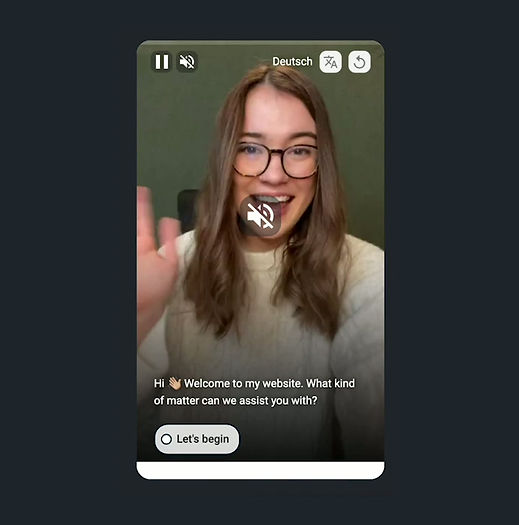
Project Overview:
The chatbot provides built in chat scripts tailored to different types of legal matters. The widget is embedded directly on the client’s website and helps capture potential leads through thousands of guided prompts. Users can also submit their own questions and prompts using recorded video messages.

My Role:
-
Defined new product features and improved existing experiences.
-
Conducted competitor analysis and created user flows and personas based on research insights.
-
Designed and prototyped low fidelity and high fidelity wireframes to support faster development.
-
Created a design system to improve consistency and usability across the product.
-
Documented design decisions and prepared clear handoffs for development teams.
-
Validated product requirements by creating test scenarios and collaborating with the QA team.
Challenges:
-
Building trust when collecting users’ contact information.
-
Supporting legal cases with different levels of complexity.
-
Creating trust in a digital attorney experience.
-
Designing for different users, devices, and behaviors.
Problems:
-
Finding the right law firm for a specific case can be difficult.
-
Users may struggle to clearly explain their legal issues.
-
Traditional lead intake can be time consuming and costly for law firms.
-
Chatbots need to provide a trustworthy and effective intake experience.

Solutions:
To solve problems, I used the Design Thinking approach. Here is the process I used to practice Design Thinking:
Discover-Define-Ideate-Design
Define:
Based on the user research results and business objectives, we should cover both the Product’s B2B and B2C sides.
On the dashboard (B2B side), we were in touch with businesses growing their firm and looking for more market range.
Moreover, the Product’s Chat widget (B2C side) must be tailored to the end user’s needs.

Discover:
Our product managers handled user onboarding sessions, but we were frequently in touch due to being capable of gaining quantitative and qualitative insights from our consumers.


User Types:
Classic law firms are less familiar with modern digital tools, while modern users actively use software to manage leads and compare products. End users are primarily mobile users seeking legal help, often in stressful situations.
Ideate:
We reviewed the existing features and identified what needed to change. I collaborated with the PM and design team to define priorities, create new user flows, and categorize features as Must Have, May Have, and Nice to Have. Then, I quickly moved from sketches to wireframes and UI components to meet the project timeline.


Design:
To understand what feeling the design wanted to convey, I designed 3 different visual versions and got them criticized by stakeholders. Then, I prototyped the approved designs to hand them off for development.

Design Process:
Using the existing Design System saved time and kept the experience consistent. I worked closely with developers, PMs, and stakeholders across multiple sprints, starting with a simple and clear flow for users to quickly create and customize their bot.

Dashboard:
Users had been confused and overwhelmed with many unnecessary settings in the previous version and needed to catch a bot as fast as possible. With the new dashboard, they could create and organize a bot after testing how it would appear on the hosting website.

By making it easier for users to self-create the bot and prompts, many overworking tasks from the support team decreased.
Users can customize the appearance of their widgets to match their branding and the interface of their website.

To create a more personalized and accurate bot experience, we developed a rule based system. Users can create multiple rules based on location, time, links, and languages for each hosted domain using If Then logic.
.jpg)